
The Smithsonian
The trouble with the Smithsonian Institution is that it simply has way too much stuff to see. That’s not such a bad thing, though.
The trouble with the Smithsonian Institution is that it simply has way too much stuff to see. That’s not such a bad thing, though.
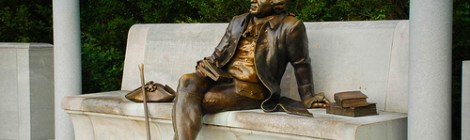
The time I visited the George Mason Memorial I stumbled across it almost completely by accident. If there was ever a memorial in Washington, DC that seems like it was intended to be hidden from view, this is it. Just as well it’s so darned charming.

Fifty years on from its end, many of the wounds from the Vietnam War have finally started to heal. Perhaps surprisingly, given its early controversy, the memorial wall has helped that healing process along.

If you’re visiting Washington, DC and find yourself standing at the southern edge of Lafayette Square, chances are you’re there to get a view of the White House. But take a few minutes to look around and you’ll also see the park contains some fascinating statuary. There are some great stories behind those statues.

Lunch counters seem like a quaint piece of early 20th century Americana, and I have long loved them for that. But as with so much of the iconography of Americana, the ugly shadow of racism has tainted our memory of lunch counters and their place in the culture. And when I say lunch counters, I’m really thinking about one lunch counter in particular: the one that once stood in the Woolworth store in Greensboro, North Carolina.
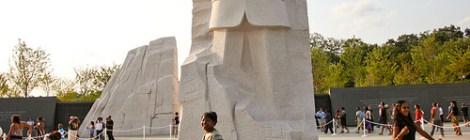
Whenever I see photos or newsreel footage of Martin Luther King’s “I have a dream” speech, I’ve taken a moment to wonder about the identities of the park rangers standing next to King. That also got me thinking more about King himself.
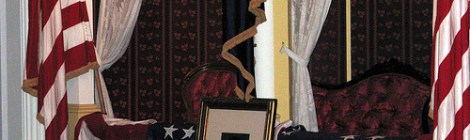
I felt a familiar Lincoln buzz the first time I walked up Washington, DC’s 10th Street NW to visit Ford’s Theatre National Historic Site in Washington, DC. The street has changed significantly since the 1860s, though the theater and the Petersen House are still there. Both are now run by the National Park Service.
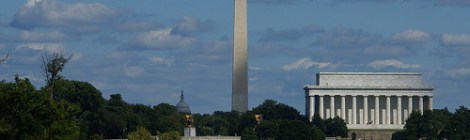
For some reason, in my head I’ve always imagined the Washington Monument and the Lincoln Memorial in a kind of faceoff, vying for top dog position on the National Mall. Both commemorate presidents held in the highest esteem among the American people. Both are, in their own ways, big imposing monuments. But they are also very different from each other.
 Dougie Does Monuments